
Trang chủ › Kiến thức › Hồ sơ thiết kế
Cách đọc và kiểm tra hồ sơ thiết kế nhà ở trước khi thi công
Một phối cảnh đẹp chưa phải là hồ sơ thi công. Trước khi khởi công, gia chủ cần kiểm tra sự thống nhất giữa kiến trúc, kết cấu, điện nước, vật liệu và dự toán. Việc rà soát đúng trình tự giúp phát hiện xung đột trên giấy—nơi chi phí sửa đổi còn thấp—thay vì xử lý khi công trình đã xây.
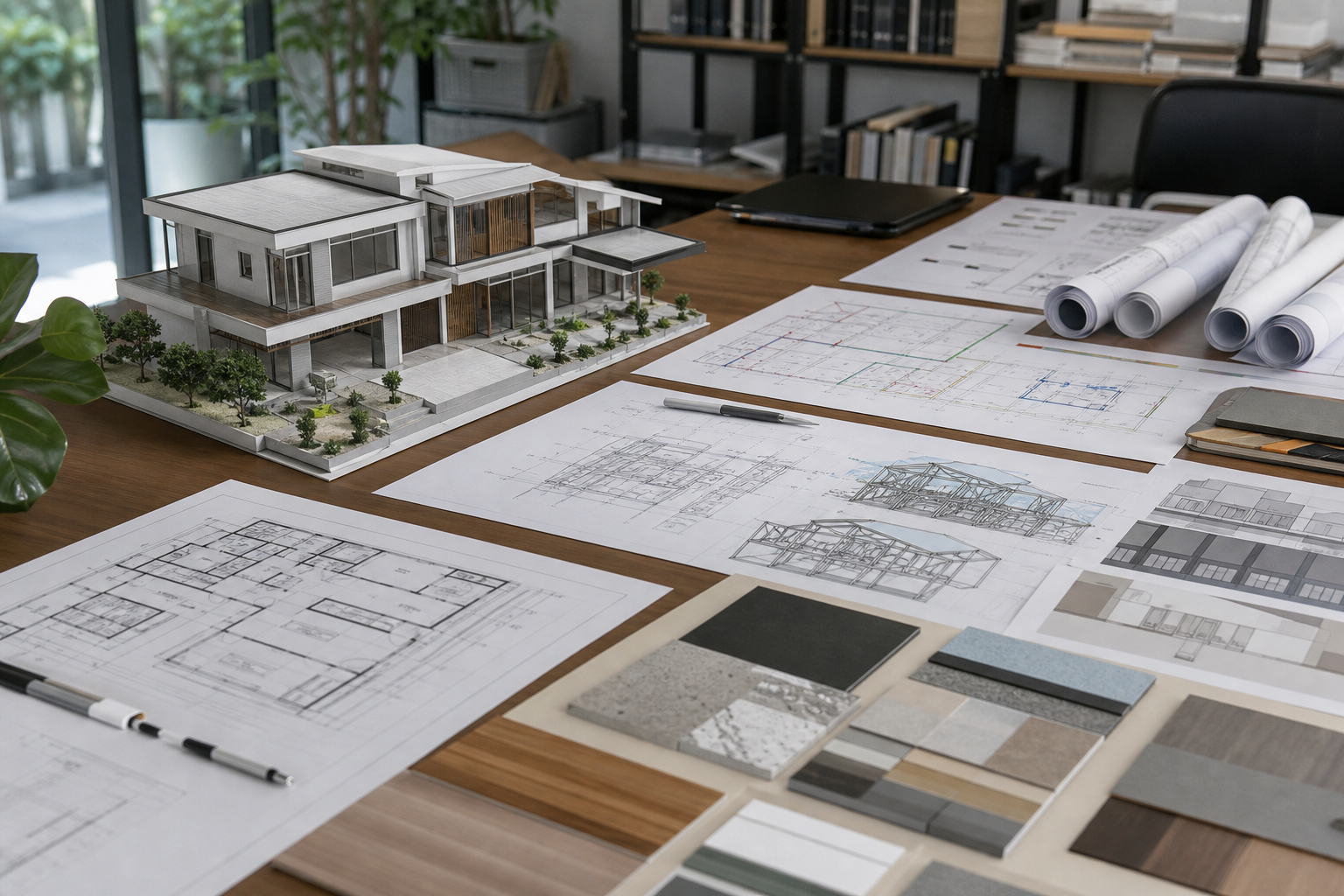
1. Một bộ hồ sơ đầy đủ gồm những gì?
| Nhóm hồ sơ | Nội dung cần có | Rủi ro nếu thiếu |
|---|---|---|
| Kiến trúc | Mặt bằng, mặt đứng, mặt cắt, chi tiết cửa, cầu thang, vệ sinh, chống thấm và hoàn thiện | Sai kích thước, bất tiện sử dụng, không thống nhất hình thức |
| Kết cấu | Móng, cột, dầm, sàn, cầu thang, mái và thống kê cốt thép | Thi công theo kinh nghiệm, khó kiểm soát an toàn và khối lượng |
| Điện nước | Cấp điện, chiếu sáng, điện nhẹ, cấp thoát nước, điều hòa và thông gió | Đục sửa kết cấu, trần thấp, thiếu ổ cắm hoặc thoát nước kém |
| Vật liệu–dự toán | Mã vật liệu, quy cách, phạm vi cung cấp, khối lượng và điều kiện nghiệm thu | Báo giá không cùng tiêu chuẩn, phát sinh và khó thay thế |
2. Đọc mặt bằng kiến trúc theo luồng sử dụng
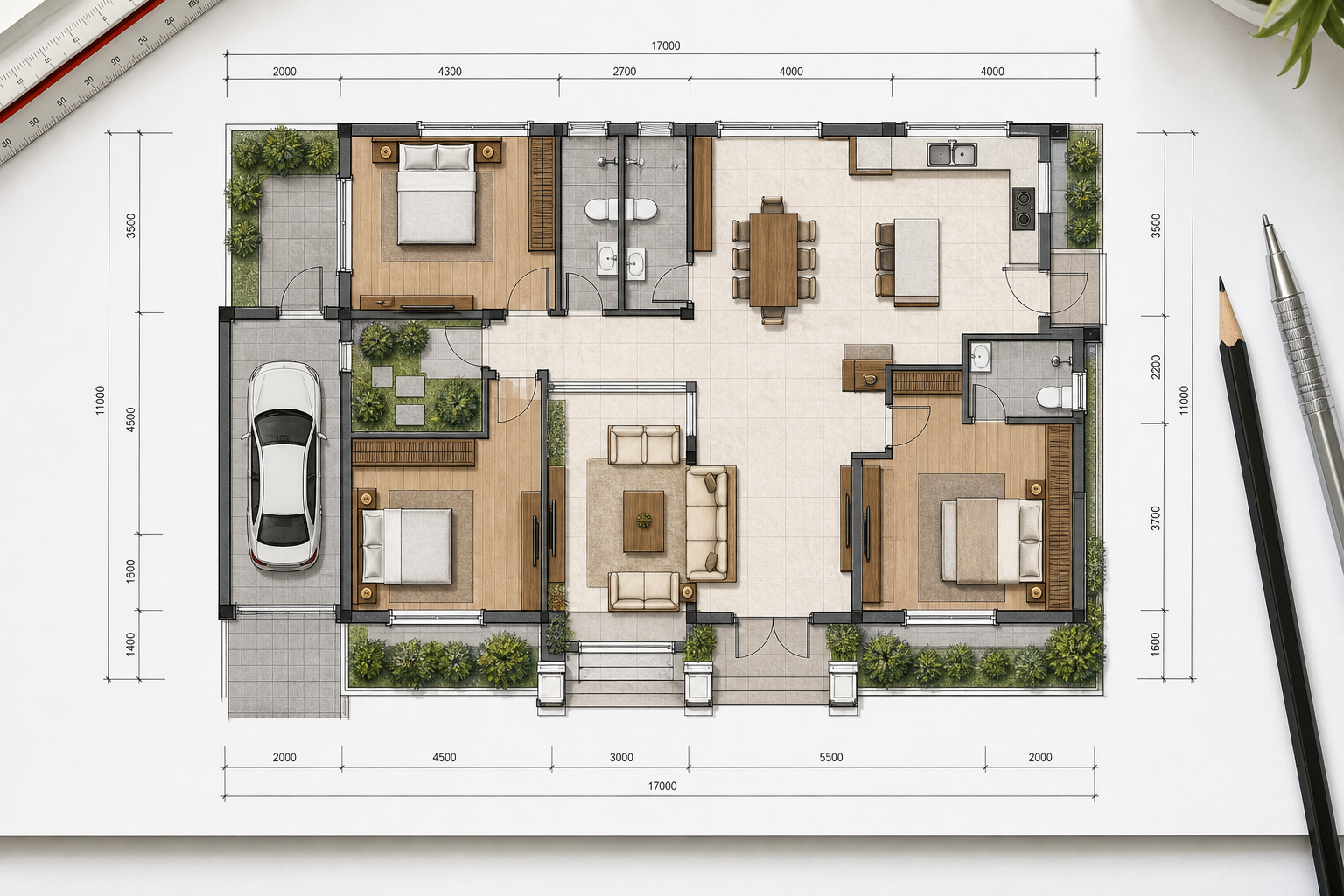
Đầu tiên hãy kiểm tra kích thước thông thủy thay vì chỉ nhìn diện tích tổng. Đặt đồ nội thất đúng kích thước, mô phỏng hướng mở cửa, khoảng kéo ghế, đường đi từ cổng đến bếp và từ phòng ngủ đến vệ sinh. Một hành lang nhìn rộng trên bản vẽ có thể trở nên chật khi xuất hiện tủ, tay nắm và cánh cửa.
Danh sách kiểm tra mặt bằng
- Cửa chính, cửa phòng và cửa vệ sinh có va nhau khi mở không?
- Phòng ngủ có vị trí đặt tủ, giường và lối đi tối thiểu hợp lý không?
- Bếp có đủ chuỗi thao tác lưu trữ–rửa–sơ chế–nấu–dọn không?
- Không gian giữa nhà có nhận được ánh sáng và đường thoát khí không?
- Luồng khách, sinh hoạt gia đình và phục vụ có gây xung đột không?
- Có chỗ bảo trì máy lạnh, bình nóng lạnh, bơm và đường ống không?
3. Đối chiếu mặt đứng và mặt cắt
Mặt đứng cho biết tỷ lệ cửa, ban công, mái và vật liệu; mặt cắt cho biết cao độ sàn, chiều cao thông thủy, vị trí dầm, trần và cầu thang. Hãy kiểm tra cửa trên mặt bằng có xuất hiện đúng vị trí ở mặt đứng, cao độ ban công có đủ thoát nước, dầm có làm thấp trần hoặc chặn cửa hay không.
4. Kiểm tra hồ sơ kết cấu
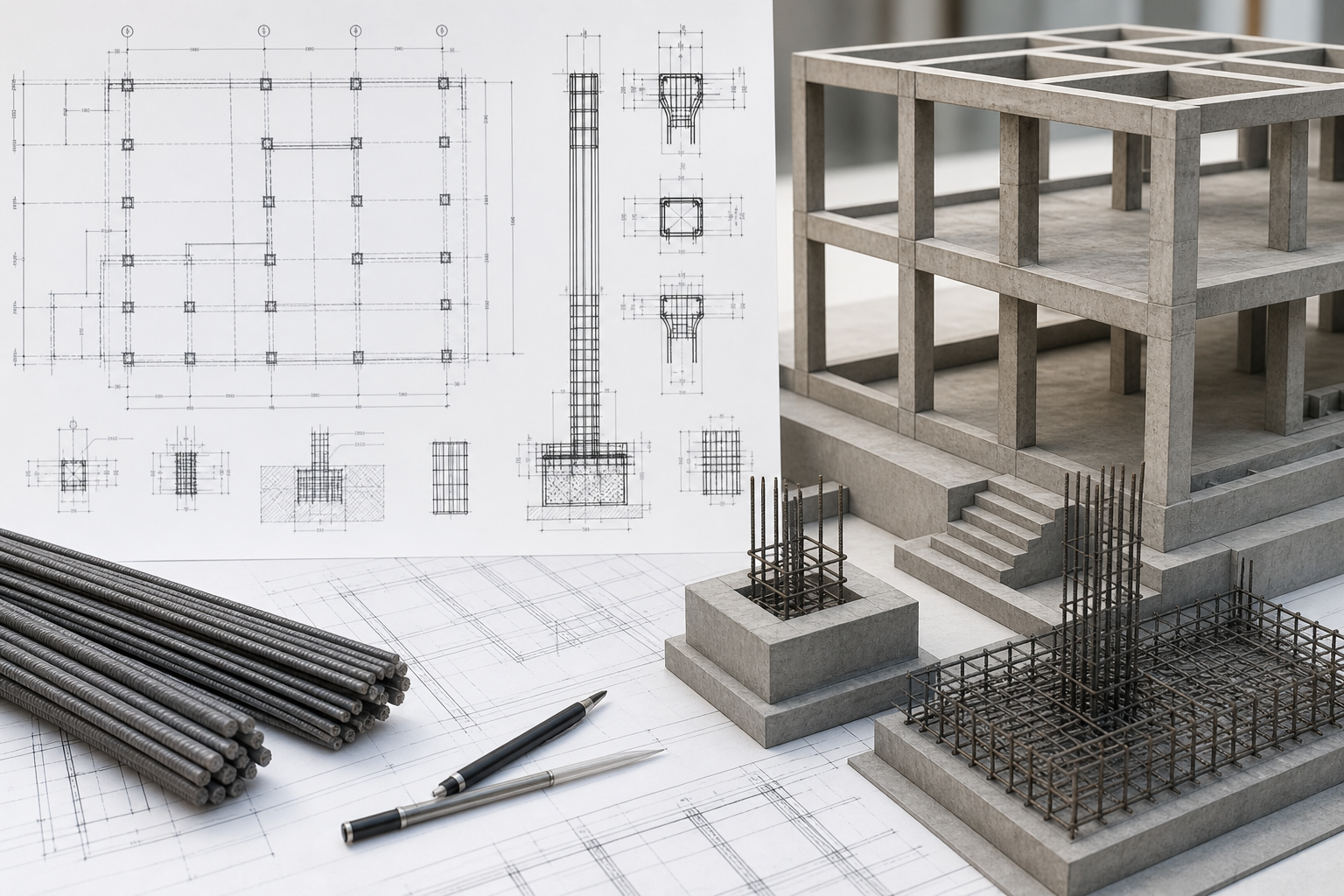
Gia chủ không cần tự tính cốt thép, nhưng cần yêu cầu kỹ sư nêu cơ sở thiết kế: kết quả khảo sát địa chất, sơ đồ chịu lực, tải trọng sử dụng, loại móng và các vị trí tải đặc biệt như bồn nước, hồ bơi, mái nặng hoặc phòng đặt thiết bị. Lưới cột phải được đối chiếu với chỗ đỗ xe, cửa, tủ bếp và không gian lớn.
- Không tự ý cắt dầm, khoan sàn hoặc dịch cột để nhường đường ống.
- Mọi thay đổi kích thước ô mở và tải trọng phải được kỹ sư xác nhận.
- Chi tiết chống thấm không thay thế cho giải pháp kết cấu và khe co giãn.
5. Phối hợp điện, nước và điều hòa

Bản vẽ điện nước cần được đặt chồng lên kiến trúc và kết cấu. Trục ống nên thẳng, có cửa thăm và không đi xuyên tùy tiện qua dầm. Dàn nóng điều hòa phải có đường tiếp cận bảo trì, thoát nước ngưng đúng độ dốc và không thổi khí nóng vào không gian sử dụng.
Các xung đột thường gặp
- Đèn trần trùng với dầm, miệng gió hoặc đầu báo.
- Ổ cắm bị tủ che, thiếu nguồn cho thiết bị cố định.
- Ống thoát đi ngang quá dài, không đủ độ dốc hoặc không có cửa thăm.
- Hộp kỹ thuật quá nhỏ, không thay được van và phụ kiện.
- Trần giật cấp đẹp trên phối cảnh nhưng không đủ chỗ cho ống và thiết bị.
6. Chốt vật liệu và phạm vi báo giá
Mỗi vật liệu cần có tên, quy cách, màu, bề mặt, vị trí sử dụng và mẫu được duyệt. Với sản phẩm có thể thay thế, phải ghi tiêu chí tương đương thay vì chỉ ghi “loại tốt”. Báo giá cần chỉ rõ ai cung cấp, ai lắp đặt, phụ kiện đi kèm, hao hụt, vận chuyển, bảo hành và điều kiện nghiệm thu.
Checklist trước khi ký duyệt
- Đóng dấu phiên bản và ngày phát hành trên toàn bộ bản vẽ.
- Lập danh sách điểm chưa thống nhất, người chịu trách nhiệm và hạn xử lý.
- Đối chiếu kích thước giữa kiến trúc, kết cấu và điện nước.
- Kiểm tra các chi tiết rủi ro cao: mái, vệ sinh, ban công, sân thượng và khu giáp đất.
- Chỉ phát hành thi công khi bản vẽ, bảng vật liệu và dự toán dùng cùng một phạm vi.
Leave a Reply