
Trang chủ › Kiến thức › Khảo sát khu đất
Khảo sát hiện trạng khu đất trước khi thiết kế nhà: checklist không nên bỏ qua
Thiết kế chỉ đáng tin khi dựa trên số liệu hiện trạng đáng tin. Kích thước trên giấy chứng nhận, ranh sử dụng thực tế, cao độ đường, vị trí công trình lân cận và điều kiện đất nền có thể khác nhau; nếu không đo kiểm từ đầu, phương án dễ phải sửa khi xin phép hoặc thi công.

1. Kiểm tra hồ sơ pháp lý và quy hoạch
Đối chiếu giấy tờ về quyền sử dụng đất với ranh đang sử dụng; xác minh chỉ giới đường đỏ, khoảng lùi, mật độ xây dựng, chiều cao, số tầng, ban công và yêu cầu đấu nối hạ tầng. Không nên chốt mặt bằng chỉ dựa vào lời truyền miệng hoặc kích thước do chủ cũ cung cấp.
- Ghi rõ cơ quan hoặc tài liệu cung cấp từng thông tin quy hoạch.
- Phân biệt diện tích đất, diện tích được xây và diện tích sàn tính phép.
- Kiểm tra hành lang bảo vệ đường điện, kênh rạch hoặc hạ tầng ngầm nếu có.
2. Đo đạc ranh, kích thước và cao độ
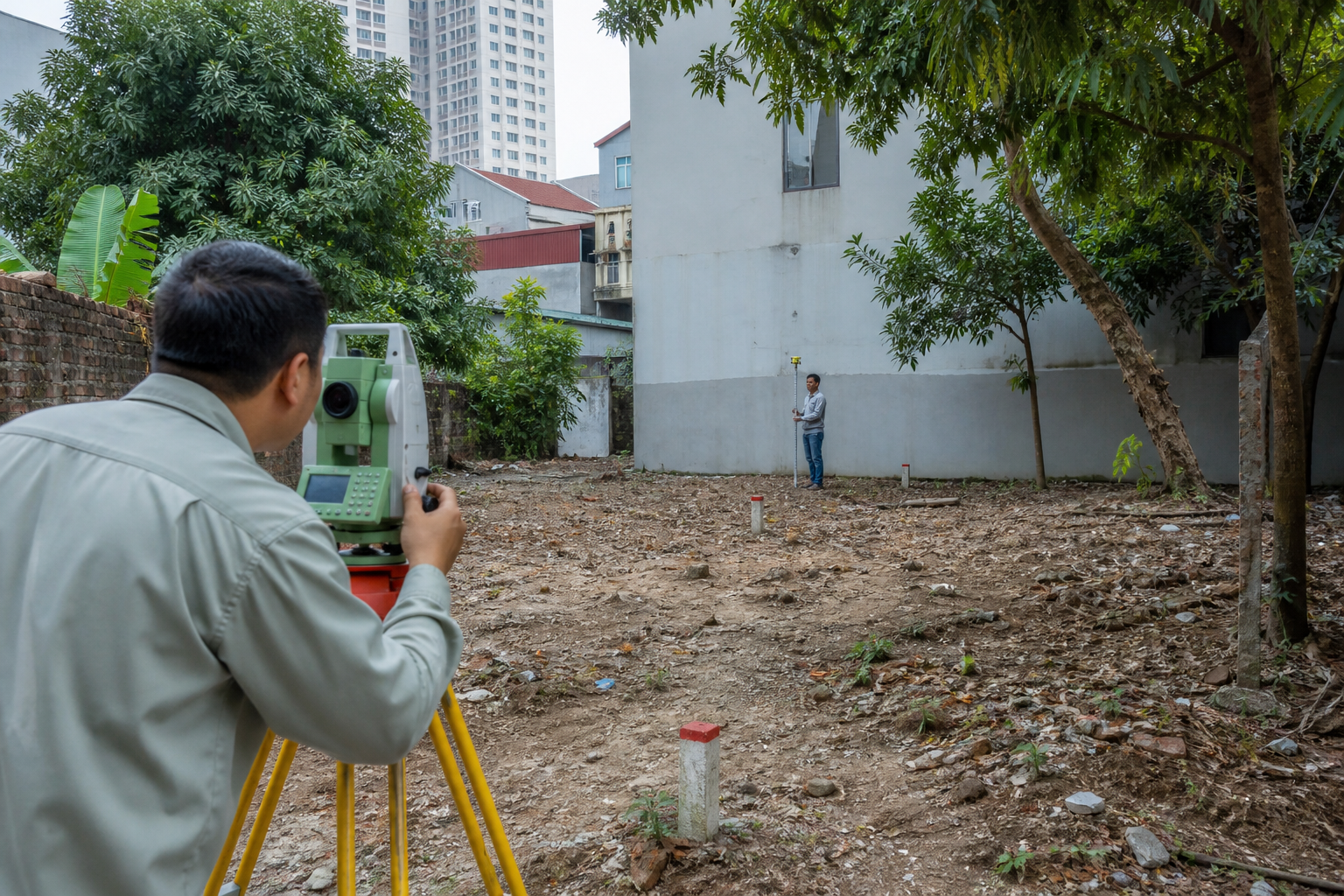
Đơn vị đo đạc cần xác định các góc ranh, chiều dài từng cạnh, độ vuông, cao độ tự nhiên, cao độ mặt đường và vị trí cổng dự kiến. Với đất méo hoặc nhiều điểm gãy, bản vẽ phải có tọa độ thay vì chỉ ghi kích thước cạnh. Đồng thời ghi vị trí cây lớn, giếng, móng cũ, cột điện, hố ga và tuyến ống nhìn thấy.
3. Phân tích nắng, gió, tiếng ồn và thoát nước
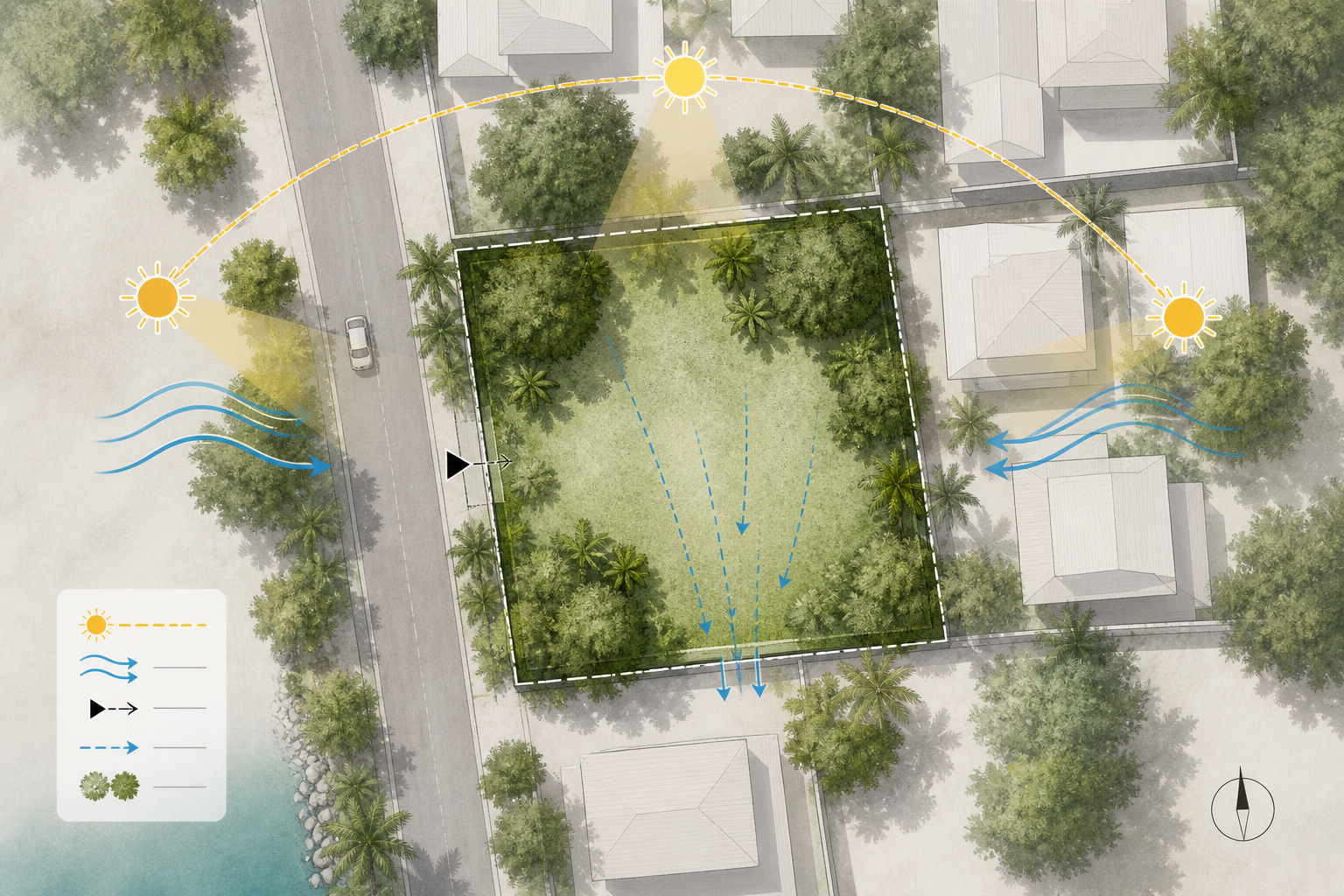
Hướng địa lý phải được ghi trên bản vẽ. Quan sát bóng đổ của nhà bên cạnh vào nhiều thời điểm; xác định mặt tiếp xúc nắng tây, hướng gió thuận lợi, nguồn ồn, bụi và mùi. Sau mưa, kiểm tra điểm trũng, dấu ngập trên tường và hướng nước từ các khu đất cao hơn. Những dữ liệu này quyết định vị trí sân, giếng trời, cửa mở, phòng ngủ và cao độ nền.
4. Ghi nhận công trình lân cận
Chụp ảnh có hệ thống tường, mái, khe tiếp giáp và dấu nứt của nhà liền kề trước thi công. Ghi loại móng nếu có thông tin, số tầng, khoảng cách và các phần nhô sang ranh. Với khu phố hẹp, khảo sát đường vận chuyển, vị trí tập kết, bán kính quay xe và giới hạn thời gian thi công.
5. Khảo sát địa chất khi nào cần?
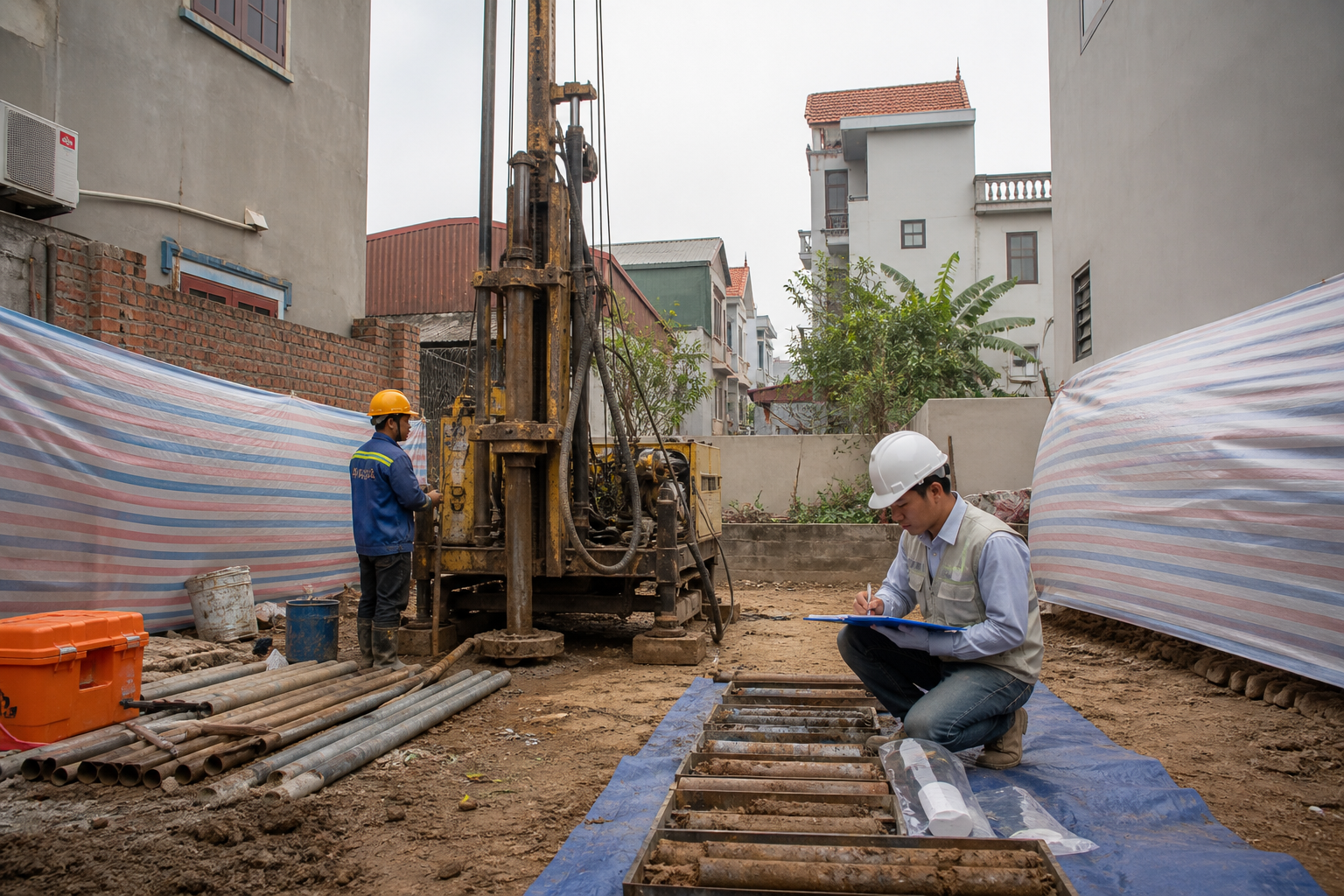
Nhà nhiều tầng, có tầng hầm, hồ bơi, tải trọng lớn, đất san lấp, nền yếu hoặc khu vực có địa chất phức tạp nên được khảo sát địa chất theo chỉ định của kỹ sư. Báo cáo cần mô tả các lớp đất, mực nước ngầm và chỉ tiêu dùng để chọn móng. Không lấy phương án móng của nhà bên cạnh làm kết luận cho khu đất của mình.
6. Bộ hồ sơ bàn giao sau khảo sát
- Mặt bằng hiện trạng có tọa độ, kích thước, cao độ và hướng Bắc.
- Mặt cắt địa hình khi khu đất dốc hoặc chênh cao với đường.
- Sơ đồ hạ tầng nhìn thấy và điểm dự kiến đấu nối điện, nước, thoát nước.
- Ảnh toàn cảnh và ảnh chi tiết công trình giáp ranh.
- Báo cáo địa chất nếu thực hiện khoan khảo sát.
- Danh sách mâu thuẫn giữa giấy tờ, quy hoạch và hiện trạng cần giải quyết.
Leave a Reply