
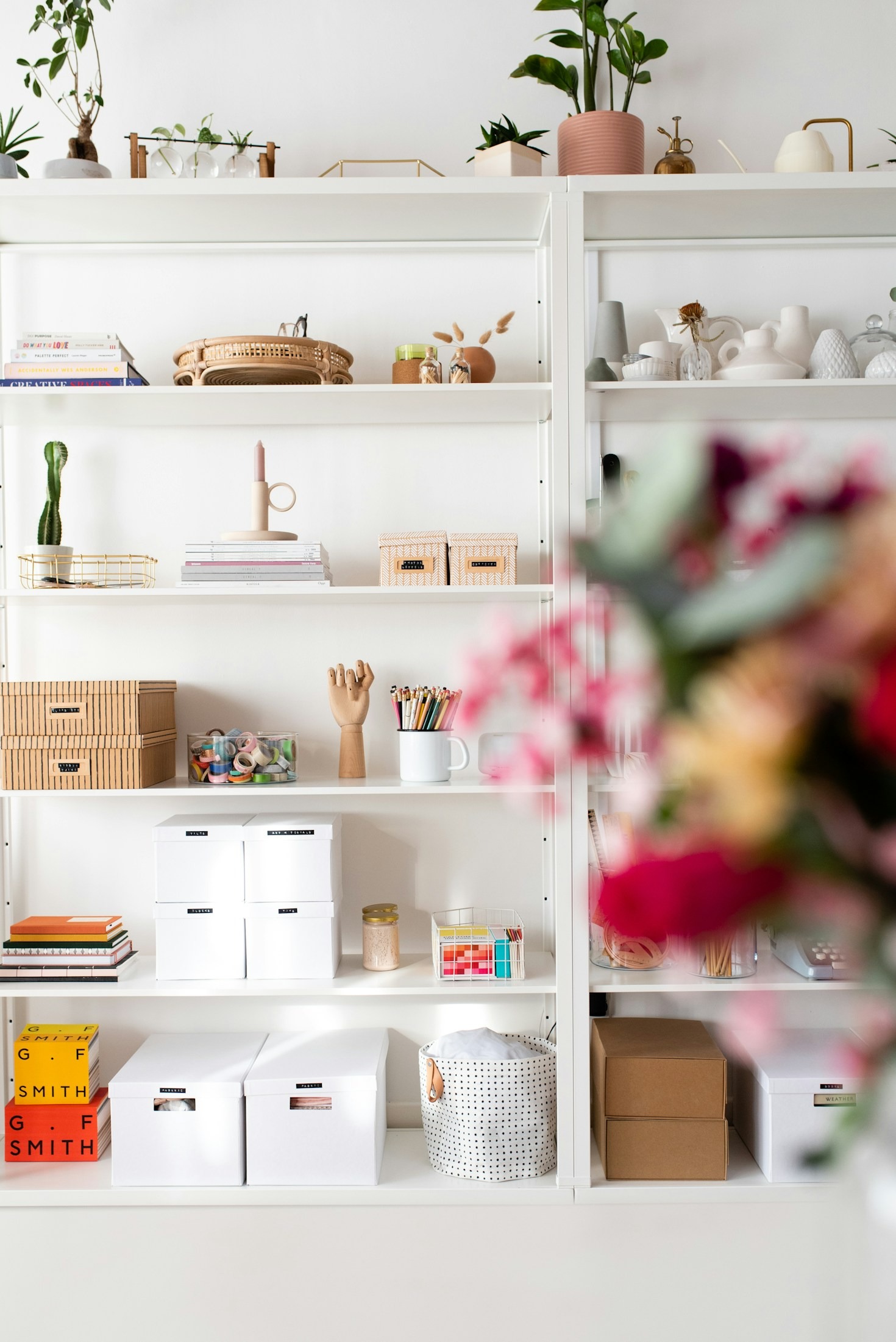
Small rooms do not always need more storage furniture. They need a clear inventory, accurate measurements, safe circulation, and storage placed where activities happen. Planning first prevents expensive organizers from becoming additional clutter.
Measure the usable space
Record wall length, ceiling height, door swing, window position, outlets, vents, radiators, and fixed furniture. Measure the narrowest access point before ordering a large cabinet. Keep primary walkways comfortable and do not block exits, ventilation, electrical panels, or heating equipment.
Inventory by category
Group similar objects and estimate the volume each category needs. Remove duplicates, expired goods, damaged items, and anything stored in the wrong room. Photograph the sorted categories; this is often more useful while shopping than a vague memory of the room.
Use vertical space safely
Tall shelving can recover unused wall area, but it must be suitable for the load and secured according to the manufacturer’s instructions. Store heavy objects low and light, rarely used items higher. In homes with children or pets, anchoring unstable furniture is essential. Do not place shelves where objects could fall onto a bed or seating area.
Choose furniture that supports the activity
A bed with accessible drawers, a desk with cable management, or a bench with internal storage can replace separate pieces. Folding furniture helps only when there is a convenient place to fold and store it. Transparent boxes reveal contents quickly, while opaque containers reduce visual noise; both need labels.
Protect frequently used items from friction
Everyday items should require one simple action to retrieve and return. If opening several lids or moving another box is necessary, the system will probably fail. Reserve deep or awkward spaces for seasonal goods and keep an inventory on the door or in a household note.
Control moisture and weight
Allow airflow around exterior walls and avoid sealing damp textiles in plastic. Follow shelf and wall-fixing weight limits. Important documents, electronics, and photographs should not be stored on floors or near plumbing. Check concealed storage periodically for leaks, pests, and condensation.
Test before buying
Mark the outline of proposed furniture with removable tape or cardboard. Live with the layout for a day and confirm that doors, drawers, and chairs can move normally. Buy containers only after the final dimensions are known.
The most effective small-room system is easy to maintain, safe under normal use, and leaves a little empty capacity. Space that is completely packed has no room to absorb everyday change.
Leave a Reply